

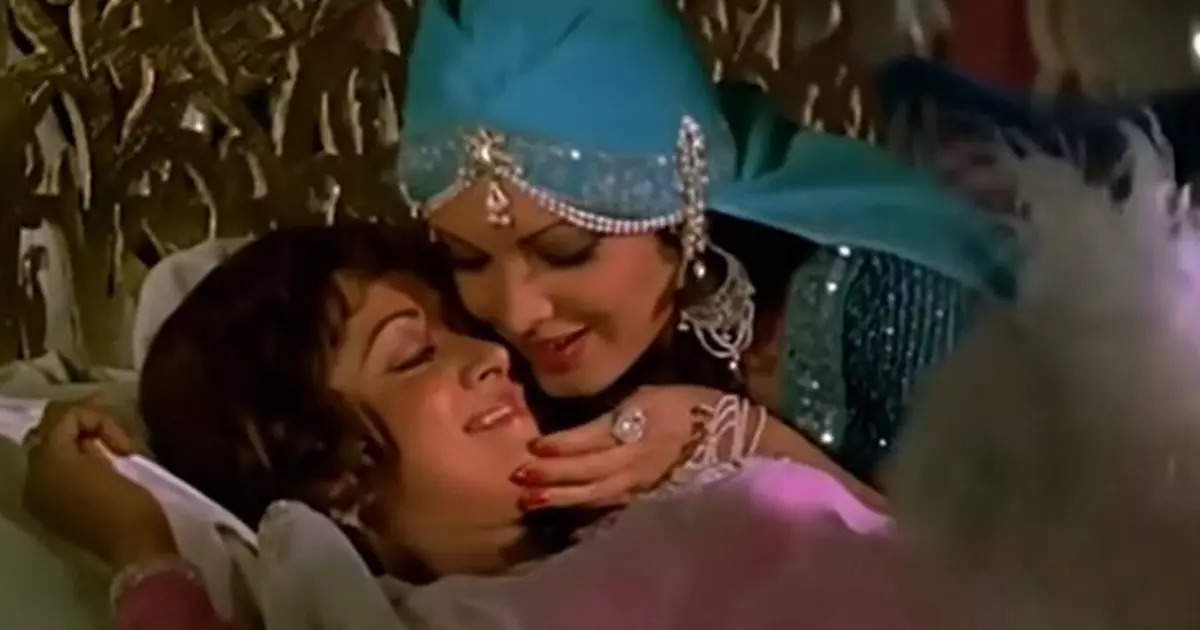

The history of Bollywood is filled with grand films and ambitious projects, but few have had the seismic impact of Razia Sultan, Kamal Amrohi’s 1983 period drama. What was intended as a cinematic masterpiece on par with Mughal-e-Azam ended up as one of Bollywood’s biggest disasters. The film not only marked the end of Amrohi’s career but also left lasting scars on the industry, plunging half of Bollywood into debt. Here’s a look back at how Razia Sultan became a cautionary tale for filmmakers in Bollywood.
A Dream Project Inspired by Bollywood’s Golden Age
In the late 1970s, Bollywood was in the midst of a golden era. Amitabh Bachchan was dominating the screen with his angry young man persona, and epic films like Sholay were becoming cultural landmarks. Inspired by this trend, Kamal Amrohi, a well-regarded director and screenwriter, envisioned a grand historical epic centered around Razia Sultan, India’s only female Muslim ruler. Amrohi aimed to create a film as timeless and culturally significant as Mughal-e-Azam, a project that took seven years to come to life.
The High Costs and Big Expectations
With a reported budget of Rs 10 crore—a staggering amount at the time—Razia Sultan became the most expensive film in Bollywood. The film featured a star-studded cast, including Hema Malini as Razia Sultan, Dharmendra as the warrior Yakut, and supporting actors like Parveen Babi and Sohrab Modi. Hundreds of technicians, thousands of extras, and elaborate sets were deployed to recreate the medieval grandeur of Razia’s court.
Despite its financial weight, Razia Sultan seemed like a worthwhile investment given its star cast and the anticipation surrounding it. However, things quickly went downhill after its release, with several unexpected factors contributing to its failure.
A Film Lost in Translation: Complex Language and Cultural Missteps
One major misstep was the film’s use of heavily stylized Urdu, which left many viewers struggling to follow the story. Amrohi’s focus on historical accuracy extended to dialogue, using classical Urdu phrases unfamiliar to the general public. Although the intention was to reflect the grandeur of Razia’s time, the complex language alienated large parts of the audience, especially younger viewers.
Moreover, the film’s slow pace and extensive runtime tested the patience of theatergoers, who expected a quicker and more dramatic storyline. The film’s cultural choices also sparked backlash. Dharmendra’s character Yakut, a slave warrior, was portrayed with a blackened face, which received negative reactions from audiences who felt it was unnecessary and offensive.
Controversy and Backlash: On-Screen Relationships That Stirred Discontent
Beyond linguistic and pacing issues, Razia Sultan delved into controversial territory with its portrayal of Razia’s personal relationships. Amrohi portrayed Razia as a ruler torn between her affections for Yakut and the close companionship of her assistant, Khakun (played by Parveen Babi). Scenes implying a close bond between Razia and Khakun raised eyebrows and provoked backlash from traditional audiences. This perceived romantic angle between the two women was unprecedented in Bollywood at the time, leading many viewers, especially from conservative families, to boycott the film.
Adding to the controversy, many religious figures objected to the portrayal of a Muslim woman in such a light, further dampening the film’s prospects. The combination of cultural backlash and the disinterest of family audiences quickly sent the film’s box office performance into a downward spiral.
A Financial Catastrophe for Bollywood
Razia Sultan’s failure wasn’t just a blow to Amrohi’s career but had a ripple effect across Bollywood. With the film running a loss of nearly 80%, producers, distributors, and exhibitors all faced massive financial setbacks. Kamal Amrohi had financed much of the film through loans, with many crew members working on credit with the promise of payment after release. When the film underperformed, Amrohi took on the financial burden himself, selling assets and using personal funds to compensate his cast and crew.
For a while, Bollywood seemed caught in a debt trap, as the failure of Razia Sultan left several production houses in distress. Industry insiders recount that during this period, many prominent filmmakers and financiers suffered heavy losses.
The Unfulfilled Vision: Projects That Never Saw the Light
The financial toll of Razia Sultan forced Amrohi to abandon his future projects. He had begun work on Majnoon, a film starring Rajesh Khanna, but it was scrapped due to financial strain. Later, he attempted to revive his career by working on a script about Mughal emperor Bahadur Shah Zafar titled Aakhri Mughal. However, his declining health and lack of funding meant the project never progressed beyond the planning stage.
The monumental losses of Razia Sultan effectively ended Kamal Amrohi’s journey in Bollywood. After his passing in 1993, Razia Sultan remained his last completed film, a bittersweet conclusion to a career that began with cinematic masterpieces like Pakeezah.
Lessons from Razia Sultan: Bollywood’s Reminder of Caution
While Bollywood eventually recovered from the financial aftermath, Razia Sultan became a cautionary tale for filmmakers. The film’s failure highlighted the dangers of high-risk investments, cultural missteps, and creative choices that stray too far from audience expectations. Today, Razia Sultan is remembered as much for its ambition as for its cautionary legacy, a reminder of the highs and lows that come with creating cinematic epics.
Despite its failure, Razia Sultan remains a fascinating chapter in Bollywood history, showing the dedication and risks filmmakers like Kamal Amrohi were willing to take in the pursuit of their artistic vision.
